Chitai Golu Devta Temple Almora

chitai mandir almora
Nyaya Devta · God of Justice

The Temple of a Million Bells

Chitai Golu Devta Temple is one of the most memorable spiritual stops near Almora, known for its bells, written petitions, and deep Kumaoni faith in Golu Devta as the deity of justice. If you are planning a short temple visit, a wider Almora itinerary, or simply looking up “Chitai Golu Devta Temple, Almora – Timing, History & Photos,” this guide brings together the essentials: what to expect, how far it is from town, the temple’s background, and simple travel tips.

Introduction

Can you imagine what it feels like when justice is not truly served? When the person who speaks the truth is made to look like a liar. When your truth goes unheard, lies are repeated so many times that they begin to sound like reality.

When the powerful silence the powerless, and you are left with nothing but the desperate urge to scream—to tell someone, anyone, what really happened… but no one listens.

“Yet somewhere, deep within, a small voice continues to whisper to the universe: Justice may be delayed, but it cannot remain unbalanced forever. The scales will find their balance.”

In the Kumaon hills of Uttarakhand, this belief has lived for generations in the form of Golu Devta—the God of Justice.

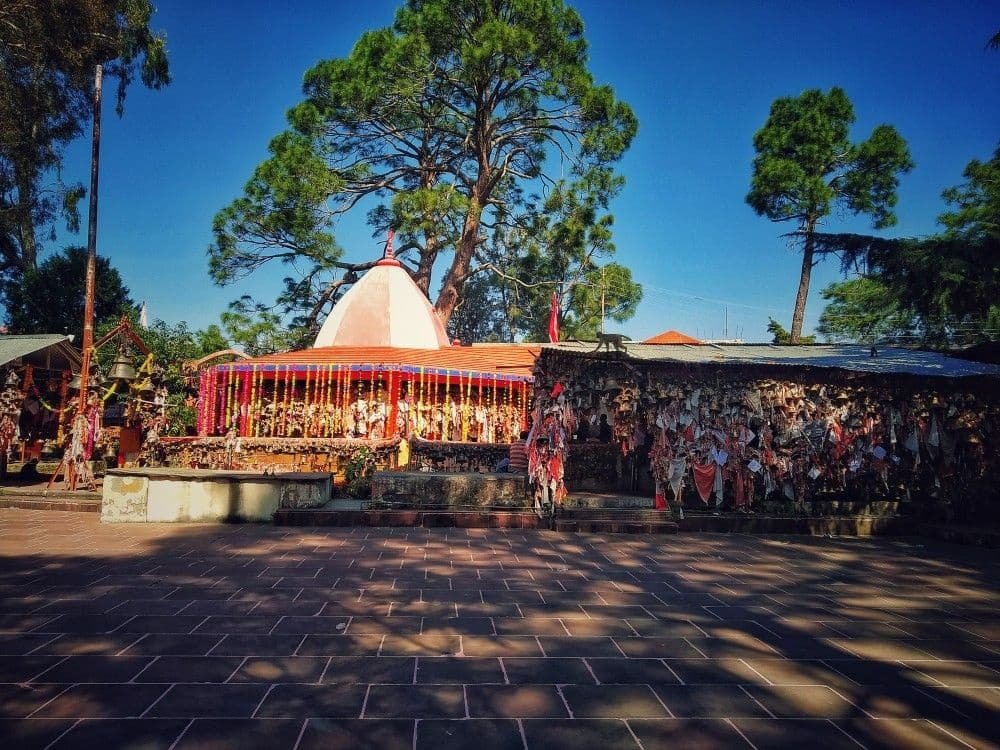
And perhaps nowhere is this faith more visible than at Chitai Golu Devta Temple near Almora. The temple is unlike many others. Thousands of bells hang across its premises, while devotees leave written petitions—sharing their grievances, hopes, and prayers with the deity they believe will listen.

Who is Golu Devta?
Chitai Golu Devta Temple Structure
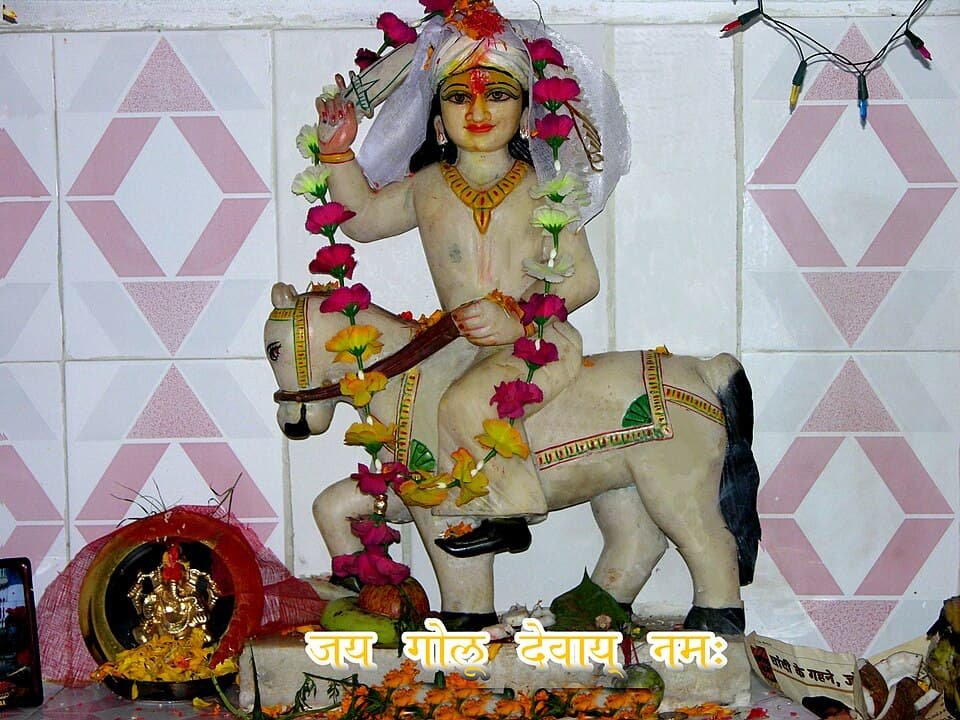
Golu Devta serves as the supreme God of Justice (Nyaya Devta) in Kumaoni culture through a unique, courtroom-like system that blends oral tradition, legalistic rituals, and deep spiritual faith. His role as a judge functions across several key dimensions.

History of Golu Devta Origin

Golu Devta is considered an incarnation of Gaur Bhairav (a form of Lord Shiva). His historical origins trace back to Champawat. He was born as a prince of the Katyuri dynasty, the son of King Jhal Rai (or Jalrai) and Queen Kalinka, and the grandson of Hal Rai. According to local narrative, King Jhalrai married Kalinka after witnessing her perform a feat of extraordinary strength—separating two fighting bulls whose horns were locked when the king’s own soldiers failed to intervene.

Palace Conspiracy and Miraculous Rescue

The Jealous Plot

King Jhalrai had seven elder queens who were childless and grew envious of Queen Kalinka. When Kalinka gave birth to a son, the elder queens orchestrated a sinister plot:
  • They replaced the newborn with a grinding stone (sil-batta)
  • They deceived the king, leading to Queen Kalinka’s imprisonment in solitude
  • The infant was locked in seven nested chests and cast into the Gori River

The Fisherman’s Rescue

A childless fisherman named Bhana rescued the floating chest at Gorighat, adopted the boy, and named him Goriya. The child survived attempts on his life through divine protection.

The Wooden Horse & Revelation

As Goriya grew, displaying divine traits, he asked for a horse. Unable to afford a real one, Bhana made him a wooden horse. Goriya rode it to the riverbank where the queens filled their pots.

Goriya countered their mocks: “If a woman can give birth to a grinding stone, then a wooden horse can drink water!”

Truth Revealed, Justice Served

Word reached King Jhalrai, who summoned Goriya to court. In a miraculous moment, milk flowed directly from Kalinka’s breast to the child’s lips, confirming motherhood and exposing the plot. The guilty queens were punished, Kalinka’s honor restored, and Goriya was crowned prince.
1000s
Brass Bells
Centuries
Of Faith
Justice Cases
4
Sacred Shrines

The Concept of “Golu Darbar”

Having suffered injustice in his youth, Golu vowed to eliminate wrongdoing throughout his realm. As a ruler, he rode a white horse across Kumaon holding open hearings (Golu Darbar) to listen directly to grievances and deliver swift judgments.
In his later years, Golu adopted a life of renunciation (brahmacharya) as a mendicant and attained spiritual enlightenment at Chitai. Following his mortal life, local communities deified him as a divine judge.
Over centuries, major shrines dedicated to Golu Devta were established across the region—including Champawat, Chitai, Ghorakhal, and Chamarkhan. These shrines remain active places of pilgrimage where written petitions are filed to seek divine justice.

Chitai vs Ghorakhal Temples

Feature Chitai Temple Ghorakhal Temple
Location ~8–10 km from Almora (Almora–Pithoragarh Highway) Near Bhowali & Nainital (next to Sainik School)
Local Status Supreme Court of Divine Justice High Court of Divine Justice
Spiritual Milestone Site of Golu Devta’s renunciation and enlightenment Major regional shrine near Bhowali
Key Audience High footfall of pilgrims & tourists nationwide Popular with students, job seekers, and locals
Distinct Features Massive accumulation of brass bells & open petitions Pinned petition letters; popular with students & locals

How to Reach Chitai Mandir

Chitai Temple Bells and Written Petitions
Nearest Airport
Pantnagar
Nearest Railway
Kathgodam
From Almora
8–10 km

By Air

The nearest airport is Pantnagar Airport, located about 115 km from Almora. From the airport, you can hire a private taxi or take a shared cab up to Almora or directly to Chitai village.

By Train

The nearest major railhead is Kathgodam Railway Station. From Kathgodam, direct private taxis, shared jeeps, and state buses run regularly to Almora and onwards to Chitai.

By Road / Local Commute

Once you arrive in Almora, local taxis, shared jeeps, or private cars are readily available. The scenic forest drive to the temple takes only 15-20 minutes.

Best Time to Visit Chitai Mandir

Opening Time
6:00 AM
Closing Time
7:00 PM
Entry Fee
Free

Best Seasons

Ideal months: March to June & September to November when mountain roads are clear and weather conditions are pleasant. Mountain roads are scenic, weather is perfect, and visibility is excellent for photography.
Avoid Peak Monsoon (July-August) due to heavy rainfall and slippery mountain routes. Landslides are common during this period.

Submission of Written Petitions (Arji)

Instead of standard verbal prayers, devotion here takes a unique documented form:

Legal Drafting

Devotees write formal written petitions (arji) on plain paper, note sheets, or legal stamp paper in their own words.

Case Details

Petitions contain personal details, explicit descriptions of disputes (property, court delays, false accusations), and all parties involved.

Filing & Notice

Letters are tied with sacred thread to temple railings. Petitioners can issue a “maat”—divine notice to opponents.
Important Note: But it does not mean you have to do the same. If you simply tell your problems to Golju, he will resolve and provide you justice. The ritual is optional—your faith is what matters.

Direct Judgments from the Jagar

If you’ve watched the movie Kantara, the Jagar ritual is very similar to what they show in the film. When a family or community requires direct divine consultation or clarification on a dispute, a shamanic ritual called a Jagar is performed. During this night-long ritual, a singer (Jagariya) invokes the deity through epic ballads while a medium (Dangariya) enters a trance, allowing Golu Devta to possess the medium to listen to complaints, render verdicts, or demand penance.

Millions of Bells as Verifiable Evidence

When a case is resolved and justice is delivered, the petitioner returns to the shrine to offer a brass bell as an act of thanksgiving. Over centuries, temples like Chitai have become covered in thousands of brass bells of every size, standing as physical testimony to his fulfilled verdicts.

Places to Visit Near Chitai Golu Devta Temple

Binsar Wildlife Sanctuary

~25–30 km away

What to See

Dense forests, Himalayan wildlife, birdwatching and Zero Point with panoramic Himalayan views

Ideal For

Nature lovers, trekking & photography

Kasar Devi Temple

~15–20 km away

What to See

Peaceful hilltop temple, mountain views and a calm spiritual atmosphere

Ideal For

Spirituality & relaxation

Jageshwar Temple Complex

~35–40 km away

What to See

Ancient stone temples surrounded by deodar forests, including Mrityunjaya and Dindeshwara temples

Ideal For

Heritage & spirituality

Katarmal Sun Temple

~20–25 km away

What to See

Historic 9th-century Sun Temple set amidst the Kumaon hills

Ideal For

History & architecture

Bright End Corner

~12–15 km away

What to See

Beautiful Himalayan sunrise and sunset views and Vivekananda memorial

Ideal For

Sunrise, sunset & photography

Deer Park (Mrig Vihar)

~12–15 km away

What to See

Forested surroundings and opportunities to spot deer and other wildlife

Ideal For

Families & nature lovers

My Experience at Chitai Golu Devta Temple, Almora
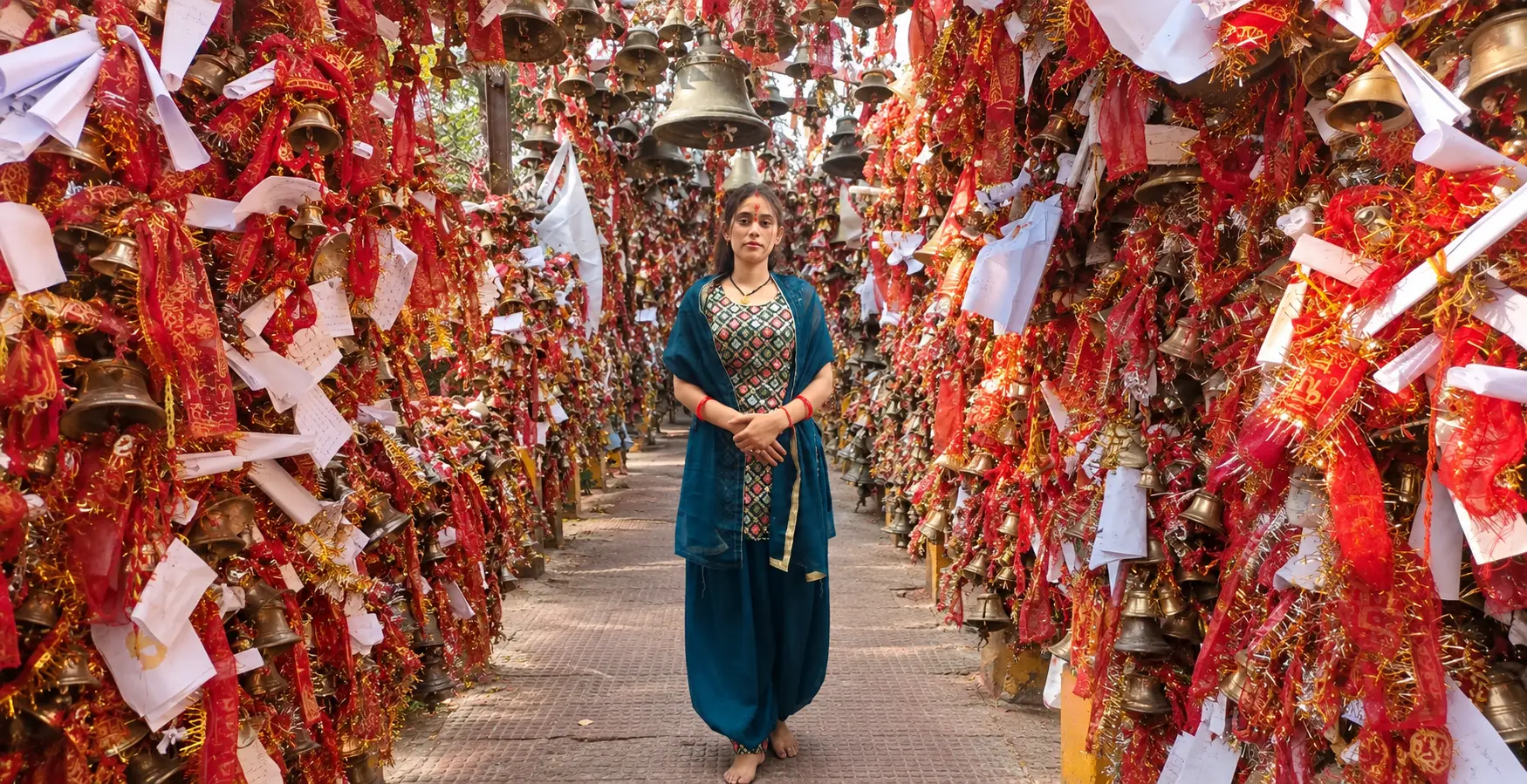
Walking Through Chitai Golu Devta Temple with Bells and Petitions
Maybe you have seen temples with grand entrances, towering structures, and walls covered in beautiful carvings. No offence, they have their own charm. But in Uttarakhand, I feel the devtas never really needed all that grandeur. They simply choose a place. A quiet hill. A forest. A bend in the mountains. And then, they stay there. It doesn’t matter whether the temple is big or small, whether the road leading to it is crowded or completely silent. Somehow, the place itself begins to feel sacred. One such place where I got the chance to visit was Chitai Golu Devta Temple in Almora. And honestly, I wasn’t prepared for what I felt there. The moment you come closer, you start noticing the bells. Hundreds of them. Big bells. Tiny bells. Old ones, new ones. They hang everywhere, quietly carrying the wishes, prayers and stories of people who came here before you. And then there are the letters. So many handwritten petitions tied around the temple—people asking for justice, for help, for something they couldn’t find anywhere else. Standing there, I couldn’t help but wonder…
“What makes a person write their deepest pain on a piece of paper and leave it in the hands of a god?”
Maybe it is hope. Maybe it is helplessness. Or maybe, sometimes, when the world refuses to listen, we simply need to believe that somewhere, someone will. That is what makes Chitai Golu Devta Temple feel different.
You don’t just visit this temple. You arrive with something inside you. A wish. A question. A pain. Or perhaps just a little faith. And you leave behind a prayer.

Frequently Asked Questions

What is the Chitai Golu Devta Temple Almora famous for?
The Golu Devta Chitai Temple, located near Almora in Uttarakhand, is widely renowned as the “God of Justice Temple” (Nyaya Devta). Dedicated to Golu Devta (an incarnation of Lord Shiva as Gaur Bhairav), the shrine functions as a spiritual court where devotees submit written petitions to resolve personal, financial, and legal disputes when human systems fail.
Why is it called the “Temple of a Million Bells”?
The shrine is nicknamed the “Temple of a Million Bells” because thousands of brass bells of every size hang across its archways, ceilings, and iron railings. Each bell represents a fulfilled petition or wish, offered by a devotee as a public token of thanksgiving and faith.
Why do devotees write letters (arji) to Golu Devta?
Devotees write letters because submitting an arji (petition) at Chitai is viewed as filing a divine court case. People resort to Golu Devta after experiencing delayed court cases, land conflicts, false accusations, or personal betrayals, believing that his omniscient judgment is swift, impartial, and unbribable.
What details are included in these written petitions?
Petitions are written on plain paper or legal stamp paper. They generally state:
  • The petitioner’s full name and address.
  • A detailed, honest description of the grievance (such as court delays, property conflicts, family disputes, or exam prayers).
  • The names of the parties involved.
  • A formal plea for justice, often accompanied by a promise to offer a brass bell once the issue is resolved.
What happens when a petition or prayer is fulfilled?
Once a dispute is settled or a prayer is answered, the devotee returns to Chitai Temple to hang a brass bell on the iron bars as an act of gratitude. The size or weight of the bell often corresponds to a vow made during the filing of the petition.
What traditional offerings are made at the inner sanctum?
In local custom, Golu Devta is presented with white offerings. These include:
  • Attire: White cloth, white shawls, and white turbans (pagari).
  • Food Prasad: Milk, curd, ghee, halwa-poori, and pakaudi.
Where is Chitai Temple located and how do you get there?
The temple is situated approximately 8 to 10 km from Almora town along the Almora–Pithoragarh Highway (State Highway 37), surrounded by pine forests and located 4 km from the main gate of the Binsar Wildlife Sanctuary. It can be reached via local taxis, private cars, or shared jeeps from Almora, Kathgodam, or Nainital.
What are the visiting hours, open days, and entry fees?
  • Visiting Hours: Generally open daily from 6:00 AM to 7:00 PM.
  • Opening Days: Open all 7 days of the week, including weekends and public holidays.
  • Entry Fee: There is no entry fee to visit or offer prayers.
How much time should visitors allocate for a visit?
A standard visit takes 1 to 2 hours. However, if you plan to draft and tie a petition, observe the courtlike rituals, or explore the bell-covered pathways in detail, set aside 2 to 3 hours.
What is the best time of year to visit Chitai Temple?
The ideal months are March to June (pleasant weather) and September to November (clear mountain skies and post-monsoon greenery). It is best to avoid the heavy monsoon months of July and August due to slippery mountain routes and fog.
How does Chitai Temple differ from Ghorakhal Temple?
In Kumaoni judicial belief, Chitai is regarded as the “Supreme Court” of divine justice, built on the sacred site where Golu Devta took renunciation (brahmacharya) and attained enlightenment. Ghorakhal (near Nainital) is viewed as a “High Court”, which is especially popular among local students and job seekers filing academic prayers.
Is it mandatory to have a legal dispute to visit the temple?
No. The temple welcomes all pilgrims, tourists, and spiritual seekers regardless of their background or whether they have an active grievance. Visitors can attend simply to experience the unique atmosphere, admire the craftsmanship, or seek general peace and blessings.
How to Reach Golu Devta Temple from Delhi?
The Chitai Golu Devta Temple in Almora, Uttarakhand, is around 370–400 km from Delhi, depending on the route. The easiest way to reach the temple is by road.
  • By Car/Taxi: From Delhi, take the route via Hapur – Moradabad – Rampur – Haldwani – Nainital – Almora – Chitai. From Almora, Chitai Golu Devta Temple is around 9–10 km away.
  • By Bus: You can take a bus from Delhi to Almora or Haldwani. From Almora, local taxis and shared cabs are available for Chitai.
  • By Train: The nearest major railway station is Kathgodam, about 85–90 km from Almora. From Kathgodam, hire a taxi or take a bus towards Almora and continue to Chitai.
  • By Air: The nearest airport is Pantnagar Airport. From there, you can hire a taxi to Almora and then continue to Chitai.
For most travellers coming from Delhi, a road journey to Almora followed by a short drive to Chitai is the most straightforward option.

Ready to Experience Divine Justice?

Plan your spiritual journey to Chitai Golu Devta Temple and witness centuries of faith, justice, and miracles.

Book Your Journey Now

Leave a Comment

Your email address will not be published. Required fields are marked *